
Rose Pests: Uncover the Secrets to Protect Your Garden from These Harmful Intruders
Roses are often called the queen of flowers, but even royalty has its enemies. Enter the notorious rose pests, those sneaky little critters that can turn a blooming garden into a battlefield. If you’ve ever found your prized rose bushes looking a bit worse for wear, you know exactly what we’re talking about.
Rose Pests
Rose pests pose significant challenges for gardeners, affecting the plants’ vitality and aesthetics. Common rose pests include aphids, spider mites, thrips, and Japanese beetles. These pests often attack tender plant tissues, leading to discoloration and stunted growth.
Aphids cluster on new growth, sucking sap and causing deformities if left unchecked. Spider mites thrive in dry conditions, leaving fine webbing and tiny yellow specks on leaves. Their rapid reproduction can result in widespread infestations, requiring immediate action.
Thrips damage flowers by feeding on petals, leading to unsightly distortion and scarring. Japanese beetles, with their iridescent bodies, skeletonize leaves and cause significant stress to the plant. Identifying these pests early allows for effective management strategies.
Management options for rose pests include organic solutions, such as insecticidal soap and neem oil. Chemical pesticides also provide options but require caution to avoid harm to beneficial insects. Regularly inspecting rose bushes helps detect signs of pest activity, making it easier to implement control measures.
Creating a healthy growing environment supports rose plants in resisting pest attacks. Proper watering and fertilizer application strengthen the plants. Additionally, maintaining air circulation around them minimizes the likelihood of infestations.
Common Types of Rose Pests
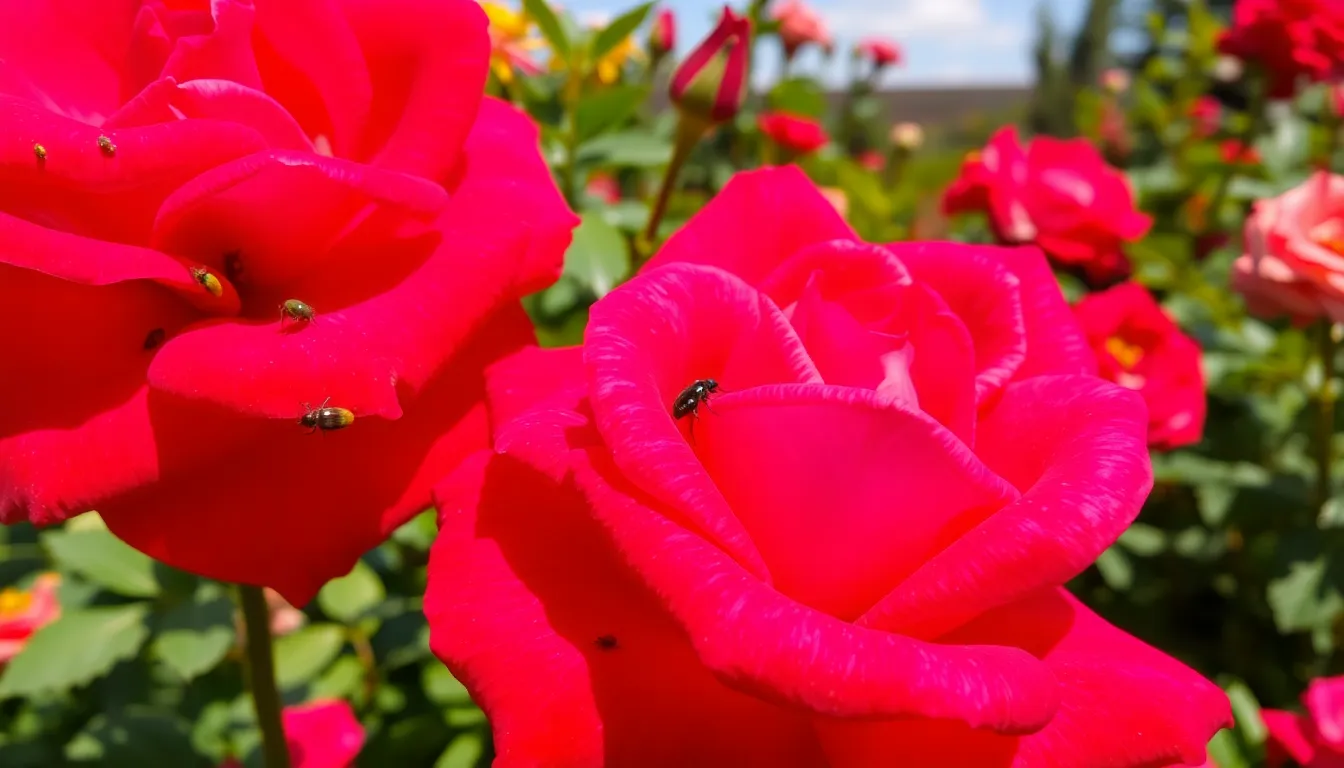
Rose gardens face threats from several common pests that can significantly impact the health and appearance of the plants. Identifying these pests early is crucial for effective management.
Aphids
Aphids are small, soft-bodied insects that often cluster on new growth. These pests suck sap from stems and leaves, leading to distorted and stunted development. Honeydew, a sticky substance produced by aphids, promotes sooty mold on foliage, further compromising plant aesthetics. Various colors, including green, black, and yellow, characterize different aphid species. Regular inspections can reveal these pests before they spread and cause extensive damage.
Spider Mites
Spider mites thrive in warm, dry conditions, making them a common problem in rose gardens. They feed on leaf sap, causing yellowing and stippling on leaves. Webbing may develop on the undersides of affected leaves, indicating a severe infestation. These tiny pests reproduce quickly, so early detection can prevent widespread damage. Keeping foliage moist and encouraging humidity around rose plants can help deter spider mite activity.
Japanese Beetles
Japanese beetles are known for their distinctive metallic green and copper coloration. These pests attack leaves, flowers, and fruits, skeletonizing foliage and leaving behind a jagged appearance. Their feeding behavior stresses plants, leading to reduced vigor. Handpicking beetles in the morning, when they are less active, can effectively manage small infestations. Additionally, monitoring for grubs in the soil can help control their population before they emerge as adults.
Effects of Rose Pests on Plants
Rose pests significantly impact the health and beauty of rose plants. Their presence can lead to various physical and health-related issues.
Physical Damage
Physical damage from pests manifests in several ways. Aphids cause visible deformities on leaves and stems by sucking sap. Spider mites produce webs that hinder photosynthesis. Distorted growth results from consistent sap feeding. Japanese beetles skeletonize leaves, making plants appear unsightly. Flower petals face damage from thrips, leading to distortion and discoloration. Monitoring for these changes ensures early identification and appropriate management.
Disease Transmission
Pests also play a crucial role in disease transmission among roses. Aphids spread harmful viruses, which can lead to declines in overall plant health. Spider mites can weaken a rose bush, making it susceptible to secondary infections. Fungal infections may arise from the honeydew secreted by sap-sucking insects. Vigilant observation helps in recognizing symptoms early and taking prompt action against infected plants. Keeping a close eye on pest activity can protect rose gardens from severe disease outbreaks.
Prevention and Control Methods
Effective prevention and control strategies are essential for protecting rose plants from pests. Understanding cultural practices, chemical treatments, and organic solutions contributes to a healthier garden.
Cultural Practices
Regularly inspecting rose plants facilitates early pest detection. Providing adequate spacing between plants enhances air circulation, reducing humidity levels that attract pests. Implementing crop rotation strategies in garden beds encourages biodiversity, preventing pest population build-up. Maintaining healthy soil through proper fertilization strengthens plant resilience against infestations. Encouraging natural predators, like ladybugs, establishes a balance within the ecosystem, aiding in pest control.
Chemical Treatments
Chemical treatments offer targeted pest control options. Choosing pesticides labeled for use on roses ensures safety for the plants. Applying products early in the morning or late in the evening minimizes harm to beneficial insects. Following the manufacturer’s guidelines for dosage and frequency ensures effective pest management while limiting potential toxicity. Thoroughly spraying affected areas increases the likelihood of eliminating pests.
Organic Solutions
Organic solutions provide environmentally friendly alternatives for managing rose pests. Using insecticidal soap effectively targets soft-bodied insects like aphids. Neem oil disrupts pest life cycles, making it useful against various common pests. Regular applications of essential oils, such as peppermint or rosemary, repel unwanted insects while maintaining plant health. Creating homemade solutions using garlic or chili pepper can deter pests without chemical exposure.
Conclusion
Maintaining a vibrant rose garden requires vigilance against pests that threaten their beauty and health. By understanding the specific challenges posed by pests like aphids, spider mites, thrips, and Japanese beetles, gardeners can take proactive measures to protect their plants. Regular inspections and a combination of organic and chemical treatments can effectively manage infestations while preserving the garden’s ecosystem.
Creating a healthy growing environment through proper care will strengthen rose plants and reduce susceptibility to pests. With dedication and knowledge, gardeners can enjoy the stunning blooms of their roses while keeping these unwanted visitors at bay.